Crawl space mold removal in Greensboro runs $2,000–$6,000 for remediation and $4,000–$10,000 with full encapsulation and a dehumidifier. Piedmont crawl spaces face two moisture sources at once: humid summer air condensing on cool framing, and red clay that holds surface water against the foundation.
Here's how to tell which one you have, because they need different work in a specific order.
The summer mechanism
From late spring into early fall, a vented crawl space works against itself. Venting assumes the outdoor air is drier than the space beneath your house: true in a dry climate, false in a Piedmont July. Humid air comes through the vents, meets floor joists, subflooring, and supply ductwork that your air conditioning has cooled from above, and condenses on them.
Not damp air: liquid water forming on wood, repeatedly, through the warm half of the year, in a place nobody looks. That's why crawl space mold here isn't a sign of a leak. It's the predictable output of an assembly working exactly as designed in a climate the design didn't anticipate.
The red clay mechanism
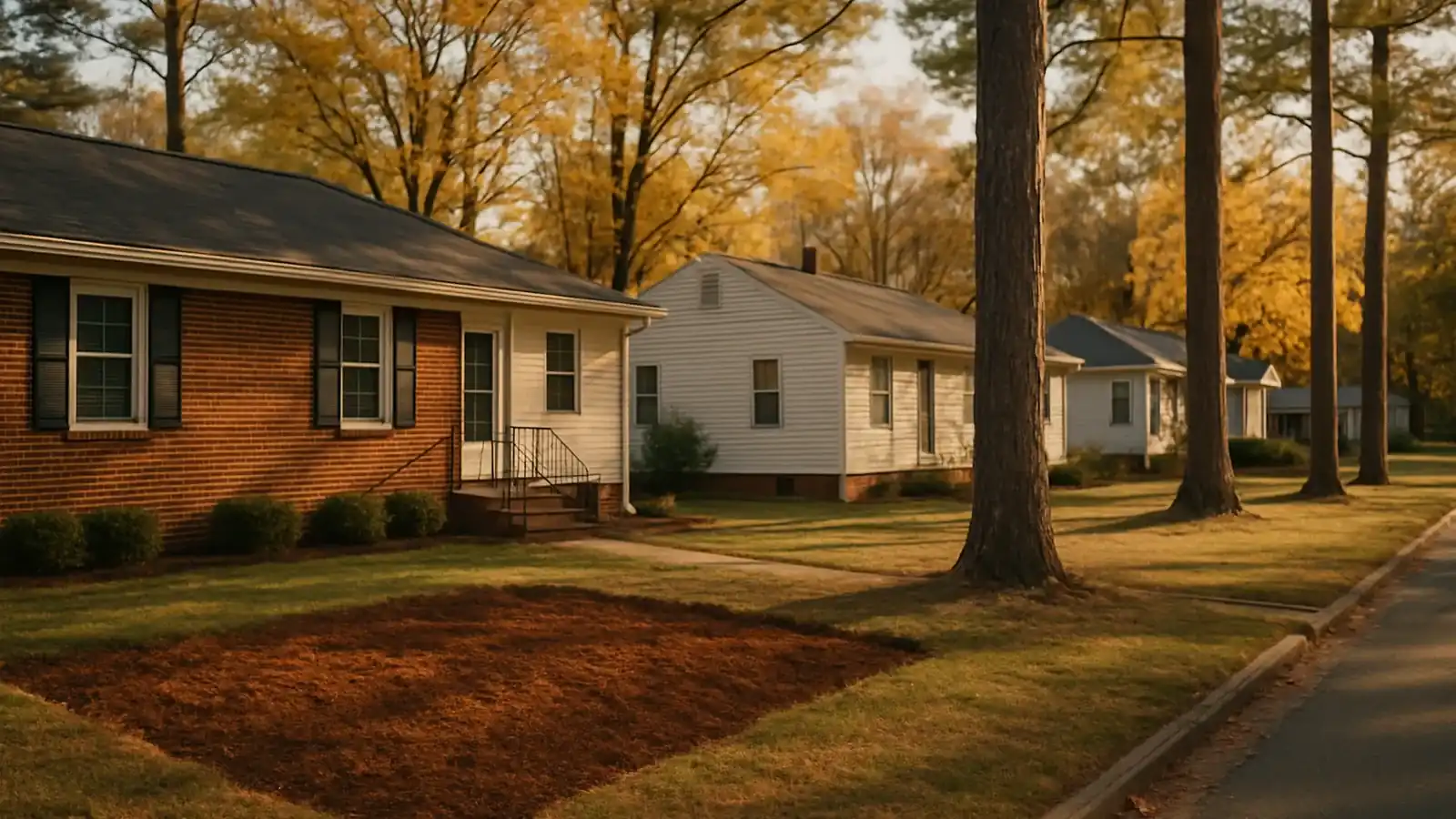
The second source is what makes this different from a sandy-soil market. Piedmont red clay percolates poorly, so rainfall that would soak away elsewhere instead ponds against foundations and runs along the surface looking for a low point, and a crawl space access or a low foundation wall is frequently that low point.
The evidence is specific and worth looking for yourself if you can safely get down there: standing water, silt lines on piers or foundation walls, a vapor barrier that has floated or shifted, and staining that indicates a water line rather than general dampness. Any of those means water is arriving, not just condensing.
Order of operations
- Correct the outside first where water is arriving: restore fall away from the foundation, extend downspouts well clear, reopen filled swales. On clay this is often decisive and it's the cheapest line available.
- Drainage inside if water still enters: a sump or perimeter drain, priced as its own line.
- Remediate: HEPA vacuuming and cleaning of joists and subfloor, removal of contaminated fiberglass batts that hold moisture and do nothing useful once wet.
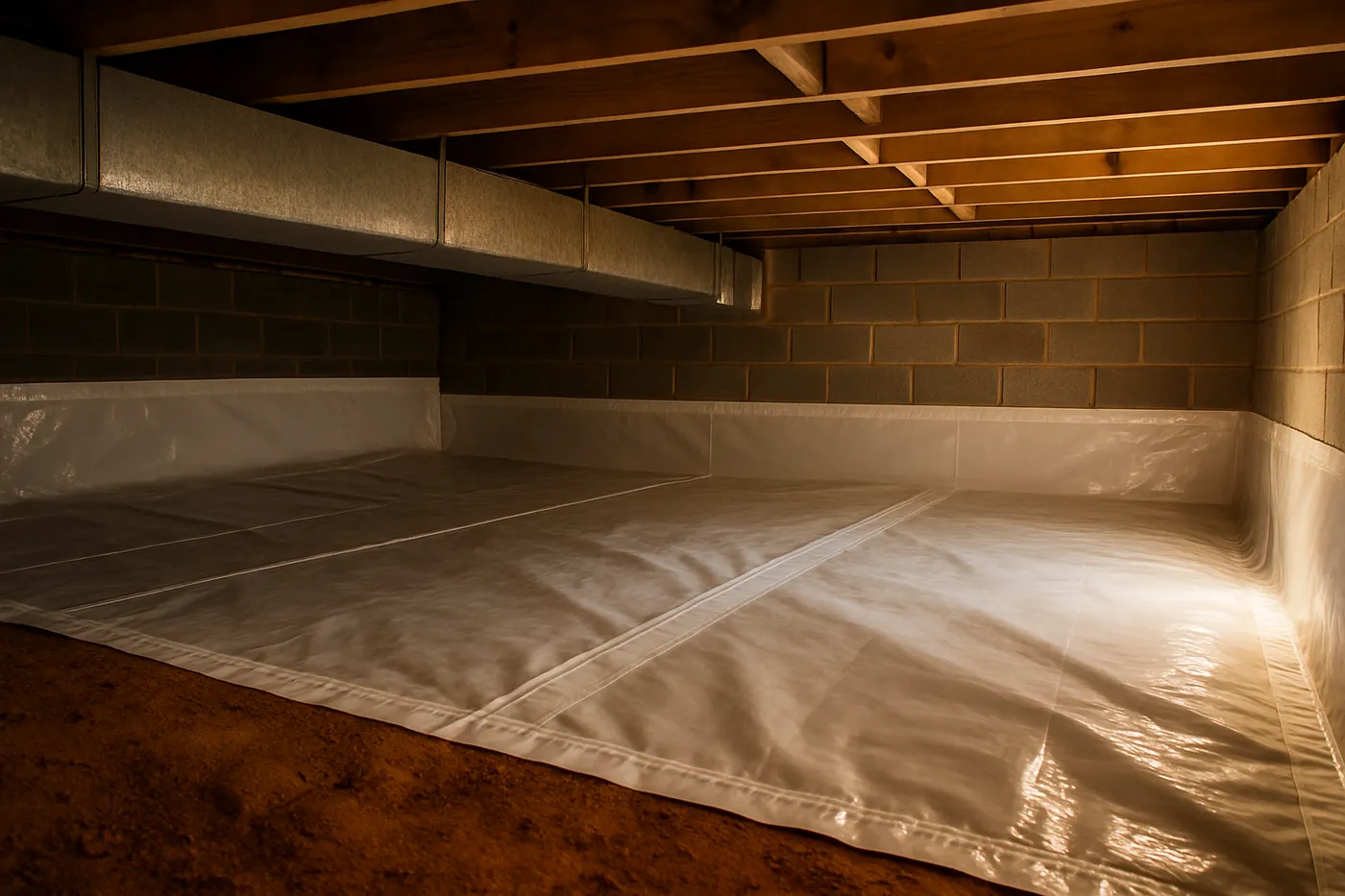
- Vapor barrier: heavy reinforced liner across the clay and up the walls, seams sealed.
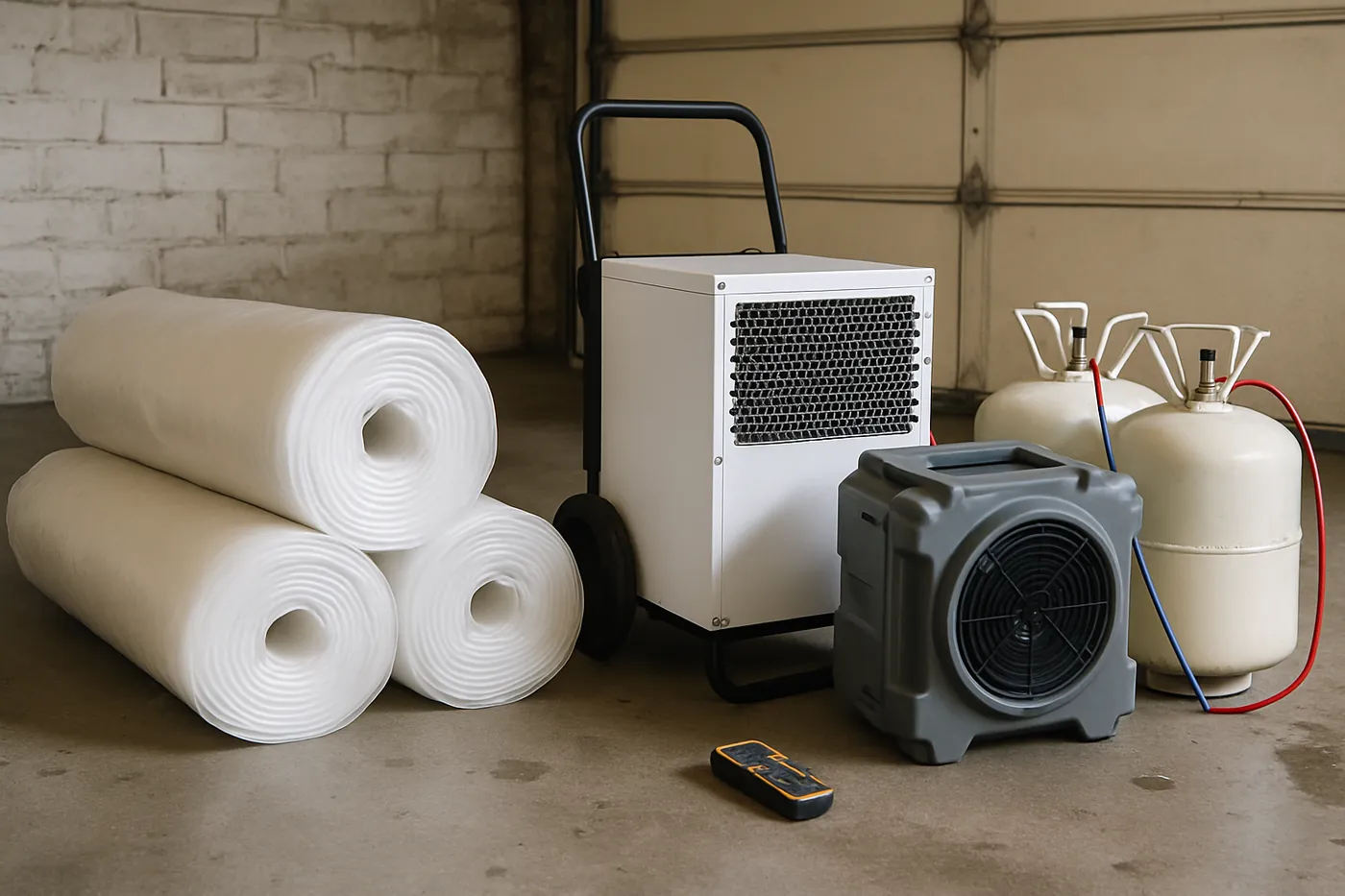
- Seal and dehumidify where the readings call for it: vents closed, rim joists air-sealed, a dedicated dehumidifier holding humidity in the 50s.
- Verify: moisture content readings on joists at completion, and a target for the space going forward.
What we won't recommend
- More vents or a crawl space fan pulling outside air in. That supplies the summer moisture.
- Encapsulation over unresolved standing water. A liner on a pond is an expensive cover.
- New fiberglass batts against the subfloor in a crawl that hasn't been sealed and drained.
- Fogging or spraying instead of removal: EPA guidance is physical removal, and a treated joist with the growth still on it isn't remediated.
Don't stop at the crawl space
Because the Piedmont runs a second condensation season at the other end of the house, a crawl space visit is also the time to look at the attic. Plenty of Triad homes have both problems and only know about one, and finding them on the same visit is cheaper than finding them a year apart.
Is the water coming from the air or the ground?
In the Piedmont it is genuinely both, in different seasons, and the fix is different for each. Red clay percolates poorly, so surface water sits against the foundation rather than draining away from it, while summer air condenses on framing that is cooler than the dew point.
| Source | How you can tell | What resolves it |
|---|---|---|
| Groundwater through the clay | Wet ground after rain; a tide line on piers | Exterior drainage and grading first: a liner over wet ground traps it |
| Humid summer air | Dry ground, wet framing, worst in July and August | Close the vents and control humidity; ventilation makes it worse |
| A plumbing leak | One wet area that does not track the weather | Repair the leak; the crawl space work is cleanup, not the cure |
| Both, seasonally | Wet in spring from below, damp in summer from above | Drainage and encapsulation in that order; skipping the first wastes the second |
Order matters more here than in a coastal market. Sealing a crawl space that still takes groundwater every spring puts a liner over the problem instead of ending it.
Crawl space questions, straight answers
What does crawl space mold removal cost in Greensboro?
Remediation alone typically runs $2,000 to $6,000 depending on square footage and how much material comes out. A full encapsulation package with a dedicated dehumidifier generally lands $4,000 to $10,000. Drainage, where red clay is delivering water into the crawl, is priced separately because it has to happen first.
Is water arriving, or is it just humidity?
That's the question that decides the whole scope, and on red clay it comes up constantly. Standing water, silt lines on piers, and a floated vapor barrier mean water is arriving. That needs grading and drainage corrected first. Condensation shows as wet framing and sweating ducts without those markers, and responds to sealing and dehumidification.
Do I need full encapsulation or just a vapor barrier?
Frequently just the barrier plus better drainage outside, and an honest specialist will tell you that rather than sell the package. A crawl over dry clay with humidity only modestly above the house often needs a proper liner and corrected downspouts. Encapsulation with a dehumidifier earns its price where humidity stays high after sealing.
Should I add more crawl space vents?
You shouldn't add more crawl space vents. Venting assumes outdoor air is drier than the crawl space, and through a Piedmont summer it isn't, so vents supply the moisture rather than removing it. Adding vents or a fan that pulls in humid summer air increases condensation on cool framing rather than reducing it.
Will this fix my cupping hardwood floors?
It stops the cause. Hardwood cups when the underside gains moisture the top doesn't, so controlling crawl space humidity ends the mechanism, and mild cupping often relaxes once moisture content evens out over a season. Wait before refinishing, because sanding a floor that's still moving means doing it twice.
Get a Greensboro mold inspection
Tell us what you’re seeing: a musty smell near the floor, dark streaks on attic sheathing, staining on a wall, water standing against the foundation, and we'll pass your request to one independent local specialist, who can set up an inspection. A local specialist who works in Greensboro will call you back.