
HVAC mold removal in Greensboro runs $500–$2,500 for coil, pan, and cabinet work, and $2,000–$6,000 where ductwork needs cleaning or replacement. The system’s cold, wet surfaces plus the Piedmont’s two condensation seasons make the air path this market’s quietest mold habitat.
Where systems grow mold, what cleans versus what replaces, and the fixes that stop recurrence.
Why the air path grows mold
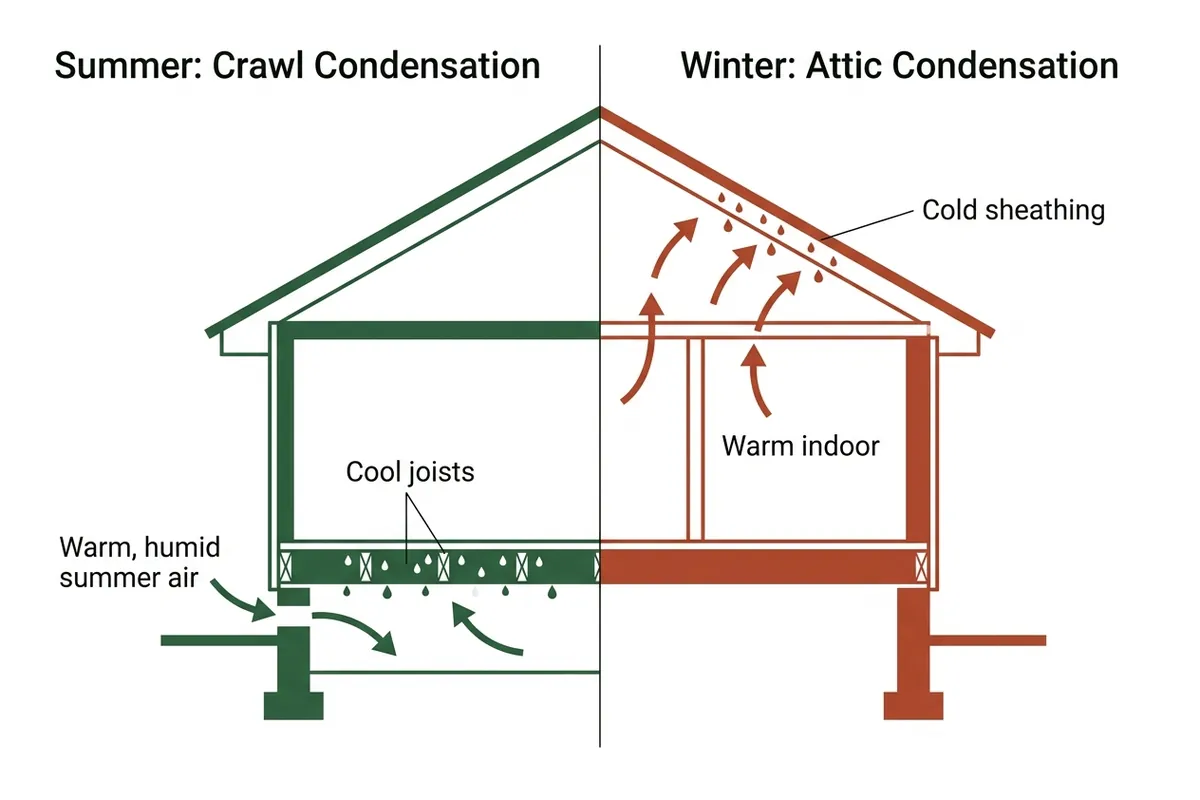
An air conditioner is a condensation machine pointed at itself: the evaporator coil chills below the dew point, moisture films the coil and cabinet, and the dust that slips every filter feeds growth on that dampness. A clogged condensate line backs the drain pan into a standing reservoir. Then Greensboro’s geography adds the duct problem — runs routed through humid crawl spaces and attics sweat on their skins in summer and ride the winter season’s swings, especially in the mill-era stock where ductwork was retrofitted through spaces never designed for it. The blower distributes whatever any of it grows.
Clean, correct, or replace — by component
| Component | The problem | The honest fix |
|---|---|---|
| Evaporator coil & cabinet | Condensation plus dust | Contained cleaning; filtration upgrade |
| Condensate pan & line | Clogs make a reservoir | Clear, treat, re-slope the drain |
| Sheet-metal ducts | Surface growth | Mechanical cleaning — metal cleans well |
| Flex duct, colonized | Can’t be cleaned convincingly | Replacement — usually cheaper anyway |
| Internal fiberglass liner, colonized | Porous — growth roots in | Replacement; “treating” it is cosmetic |
| Runs through crawl or attic | Duct sweat, both seasons | Seal and insulate, or re-route |
The cleanup, and what keeps it clean
Work runs under containment with the system off: coil and cabinet remediation, pan and condensate correction, duct cleaning or replacement per the table’s honesty rules. Then the recurrence fixes — condensate drainage that actually drains, filtration that catches what feeds colonies, and sealing plus insulation on every run crossing unconditioned space. Where the smell traces past the system to the rooms it serves, the general removal page covers wall and surface work, and attic or crawl space colonies along the duct route get scoped in the same visit — one air system, one plan. Prices per line in the cost guide; testing available where clearance needs numbers.
Keeping the air path clean afterward
An HVAC system that has been cleaned and corrected stays clean on a schedule, not on hope. Change filters at the interval the equipment actually calls for rather than when you remember, and use the filter the system was designed for — an over-restrictive filter starves airflow and makes coils sweat, which is the condition you just paid to end. Twice a year, pull the panel and look at the coil and the drain pan: standing water or a slow drain line is the earliest warning available. Keep the condensate line clear, confirm the return is sealed so it isn’t drawing humid crawl or attic air, and in a Piedmont summer set the fan to auto so the coil gets a chance to dry between cycles.
HVAC mold questions, straight answers
How does mold get into an AC system?
Condensation, mostly. The evaporator coil and its cabinet run cold and wet by design; dust arriving through filters feeds growth on that dampness, and a clogged condensate line turns the drain pan into a reservoir. Duct sweat does the rest — uninsulated or leaky ducts through humid spaces condense on their skins, inside and out.
Is the musty smell when the AC kicks on actually mold?
Often, yes — the blast of air pushes spores and microbial odor off a colonized coil or pan straight into the rooms. It's the most common way Greensboro homeowners discover the problem, and it's diagnostic: odor synced to the blower points at the air path, not the walls. An inspection of coil, pan, and the first duct runs usually finds the colony.
Can moldy ductwork be cleaned, or does it need replacing?
Sheet metal cleans well; the judgment call is flex duct and internal fiberglass lining. Colonized flex runs are usually cheaper to replace than to clean convincingly, and porous liner that's grown mold generally can't be restored to clean — replacement is the honest answer there. A bid that promises to 'treat' porous liner in place deserves questions.
Does a mill-era house with retrofit ducts have special problems?
Usually the routing. Retrofitted systems in older Greensboro stock often run ducts through unconditioned crawl spaces and attics — both condensation seasons' territory — where summer duct sweat and winter temperature swings work on every seam. Sealing and insulating those runs is as important as cleaning them; otherwise the system re-wets itself.
What does HVAC mold cleanup cost in Greensboro?
Coil, pan, and cabinet remediation with condensate correction typically lands $500-$2,500; adding duct cleaning or flex replacement moves scopes into the $2,000-$6,000 band. The moisture fixes — condensate drainage, duct sealing and insulation — are what keep it from recurring, and they're priced in the same written scope.
Are chemical treatments and sanitizers worth paying for?
Only as a finishing step after physical removal, never instead of it. Coating a dirty coil or fogging a contaminated duct leaves the growth in place under a chemical film, and EPA guidance is explicit that biocides are not a substitute for cleaning. Ask what is being physically removed, what is being replaced, and what the chemical is actually for.
Get a free Greensboro mold inspection
Tell us what you’re seeing — a musty smell near the floor, dark streaks on attic sheathing, staining on a wall, water standing against the foundation — and we’ll schedule an inspection that goes into the crawl space and the attic. We reply the same business day.