Most Burlington mold work lands between $500 and $10,000, set by how far growth spread and whether the crawl space, the attic, or both are driving it. Red clay that holds surface water against foundations adds a third factor here. Many local specialists don't charge for the inspection; ask when they call.
Mill village housing repeats, and so does the failure
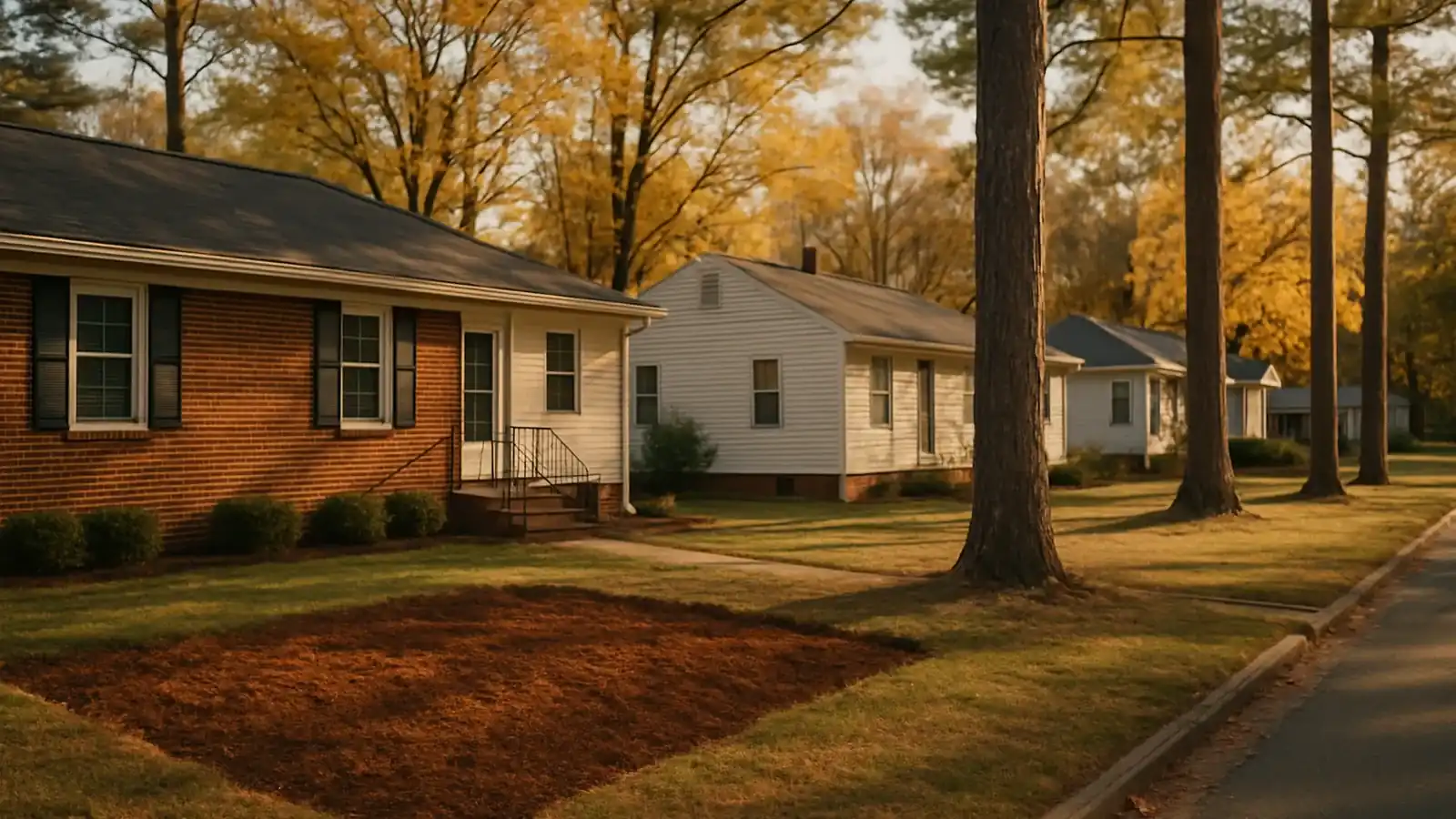
Burlington and the surrounding Alamance County communities grew on textiles, and the mill villages that housed those workers are still standing: compact, well-framed houses built in groups to a small number of plans, typically on crawl spaces, typically close together on modest lots.
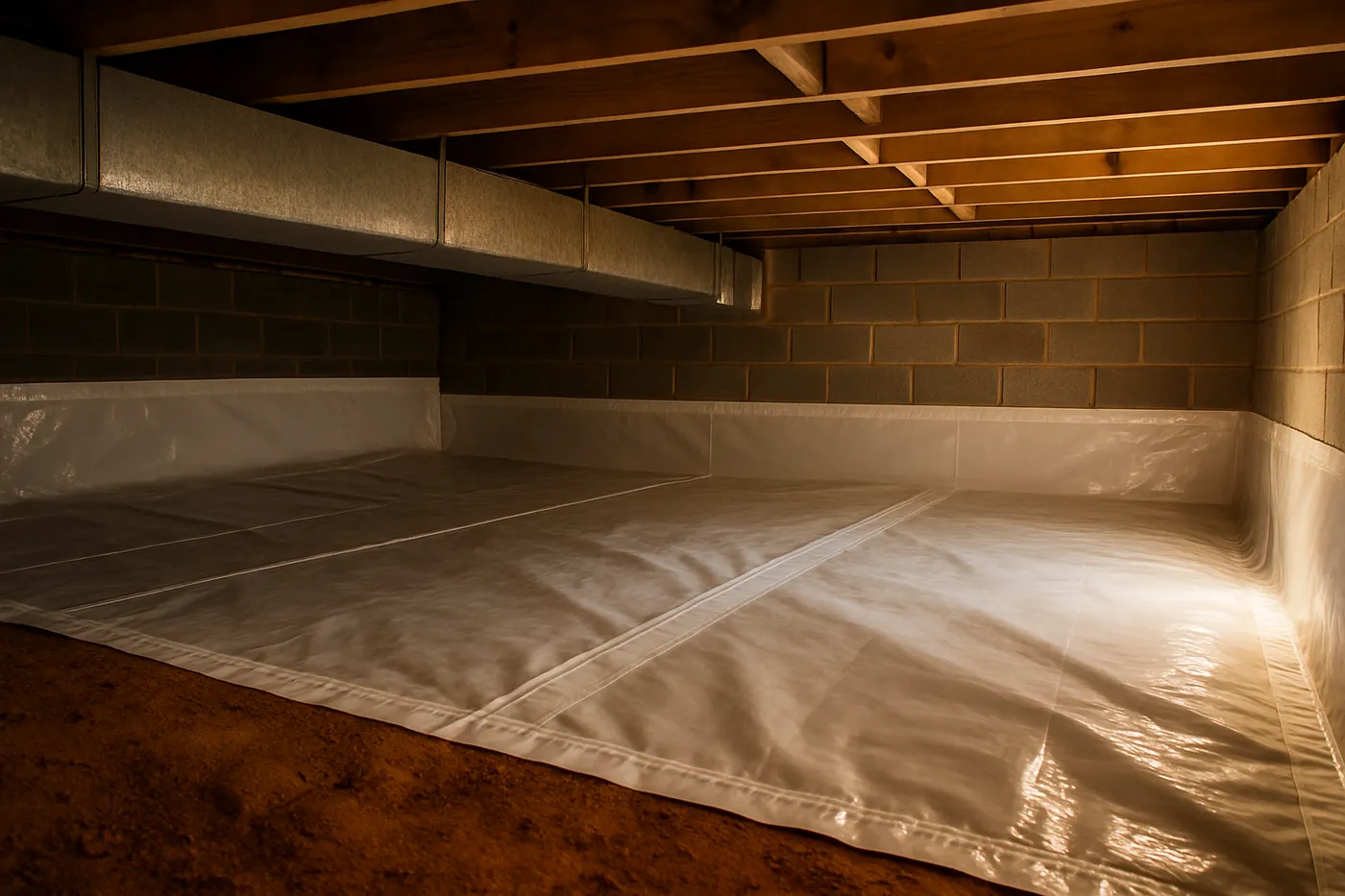
The diagnostic advantage is real. Houses built by one company in one period to one detail share one set of weaknesses: bare clay under the floor with no vapor barrier, ceilings never air-sealed against winter moisture, and crawl vents that made sense in 1920 and work against the house now. Where one house on a street has been inspected, the next one usually looks similar, and where a whole block is dealing with the same thing, that's worth knowing before anyone assumes their house is uniquely unlucky.
Close lots, shared drainage
Mill village lots are generally small and the houses sit close together, which concentrates surface water in ways a suburban lot doesn't. On Piedmont red clay that water doesn't soak away. It runs between the houses and stands where the grade lets it. Restoring fall away from the foundation and getting downspouts well clear does more here than most owners expect, and it's the cheapest line on any good scope.
Solid houses worth fixing
These are good buildings. The framing is usually sound, the material quality is often better than what replaced it, and the problems are moisture-and-detailing problems rather than build-quality problems. What they typically need is specific and affordable: a proper vapor barrier, air sealing at the ceiling, and drainage correction outside. An honest specialist would rather find that than sell a package.
Asked in Burlington
We're in a mill village. Does that matter?
It helps. Mill village houses were built in groups to a small number of plans, so they share one set of weaknesses: bare clay under the crawl, an unsealed ceiling plane, and vents that made sense a century ago. Where one house on the street has been read, yours usually looks similar.
Our lots are small and water stands between the houses. Related?
Directly. On red clay water doesn't soak away, and tight lots concentrate it into narrow side yards that are shaded and slow to dry. Where the grade between two houses has flattened, it stands there and works on both foundations. Restoring fall and moving downspout discharge is the cheapest correction available.
Is a hundred-year-old mill house worth repairing?
Almost always. These are good buildings with moisture-and-detailing problems rather than build-quality problems. A proper vapor barrier, air sealing at the ceiling, and drainage correction outside is frequently the whole answer, and it costs a fraction of what owners expect.
Is Alamance County covered?
We serve Alamance County, including Burlington and the surrounding Alamance County communities. If travel applies, ask for it to be stated openly in the scope.
What happens after you call
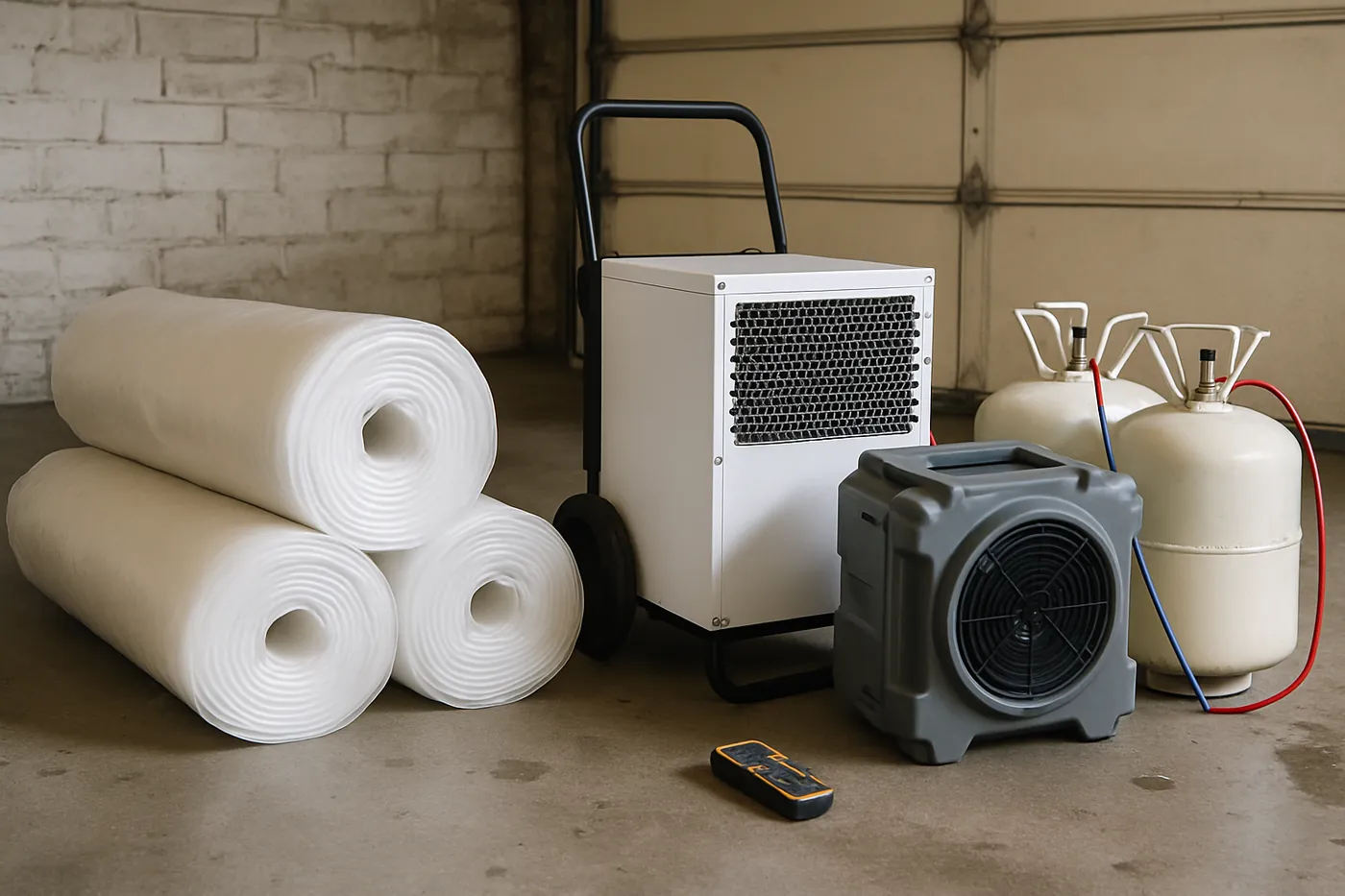
A good specialist measures Burlington homes before pricing them: moisture content in the crawl space and the attic, humidity in both compared against the living space, vapor barrier and ceiling-plane condition, and the exterior water path. Ask for a written scope with an itemized price for each line, and listen for an honest "a vapor barrier and better downspouts will do it" when that's what the numbers say. See the cost guide or the full service list.
Get a Greensboro mold inspection
Tell us what you’re seeing: a musty smell near the floor, dark streaks on attic sheathing, staining on a wall, water standing against the foundation, and we'll pass your request to one independent local specialist, who can set up an inspection. A local specialist who works in Greensboro will call you back.