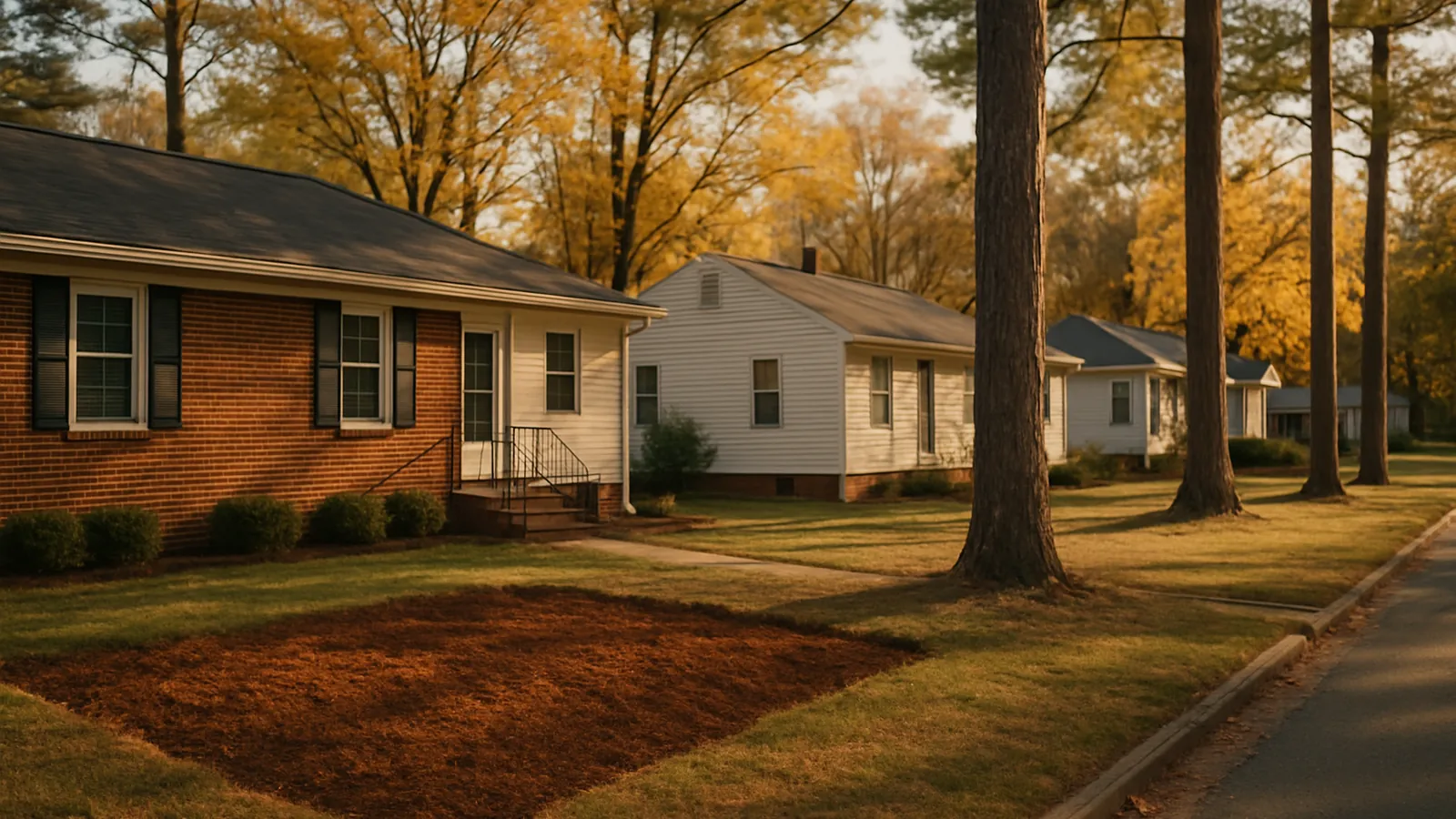
Basement mold removal in Greensboro runs $1,500–$5,000 for most scopes: contained removal plus the moisture work that stops recurrence. Piedmont basements grow mold without flooding — summer condensation on cool walls and poorly-draining red clay holding water outside keep humidity high year-round.
The two quiet moisture feeds, where growth starts, and the fix that holds.
How a dry-looking basement farms mold
The Piedmont’s summer condensation season does its below-grade work invisibly: humid air drifts downstairs, meets walls cooled by the earth, and condenses — every humid day, all season. Outside, Greensboro’s red clay percolates poorly, so the 44 inches of annual rain parks against foundations and migrates through masonry as vapor rather than draining away. Neither mechanism leaves a puddle; both hold relative humidity where colonies thrive. The result is the classic Piedmont basement report: musty odor, growth blooming behind stored boxes, dark corners on exterior walls — and an owner certain there’s never been a leak, correctly.
Where it shows, and what each spot means
| Location | What’s feeding it | The correction |
|---|---|---|
| Exterior wall corners | Coolest surfaces — condensation | Dehumidification, air movement |
| Behind stored belongings | Trapped air against cool masonry | Clear the walls, then clean |
| Base of walls, cove line | Clay-held water migrating through | Exterior drainage correction |
| Inside finished wall cavities | Vapor trapped between block and drywall | Open, remediate, re-sequence the finish |
| Around HVAC in the basement | Condensate and duct sweat — see AC cleanup | Condensate and insulation fixes |
The removal, in the order that holds
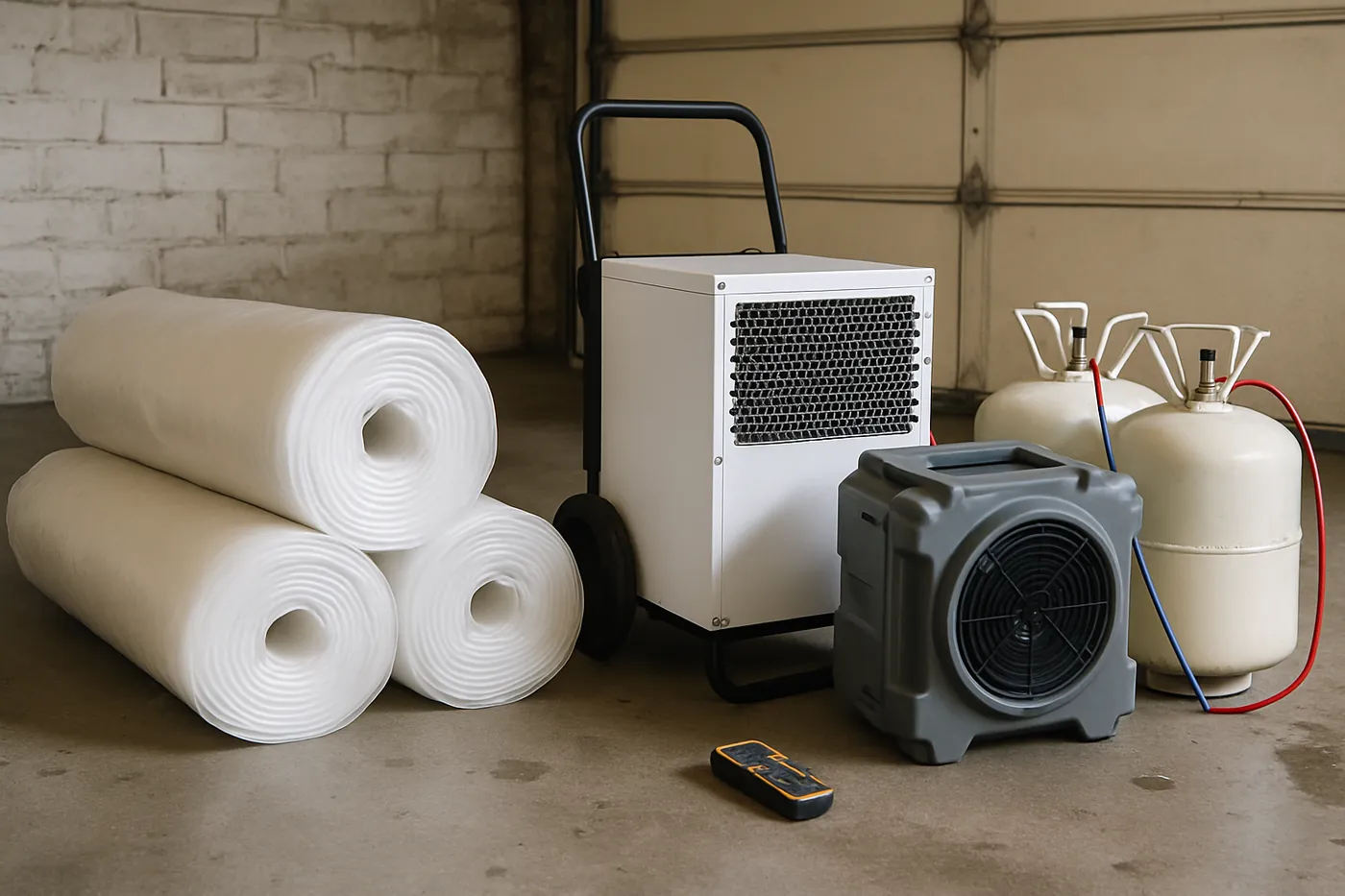
Containment at the stairwell and negative air, so the work never seeds the living floors. Colonized porous material out — drywall, insulation, cardboard, carpet — block and framing HEPA-cleaned. Then the two-front moisture fix this market demands: mechanical dehumidification sized to the space for the condensation feed, and exterior grading and downspout work so the clay stops parking water against the wall for the vapor feed. Skip either front and the colony re-subscribes. Where growth extends into the crawl space of a split-foundation house — common in this stock — both spaces get read as one moisture system. Verification follows the work; the cost guide prices every line.
Keeping the basement dry through both seasons
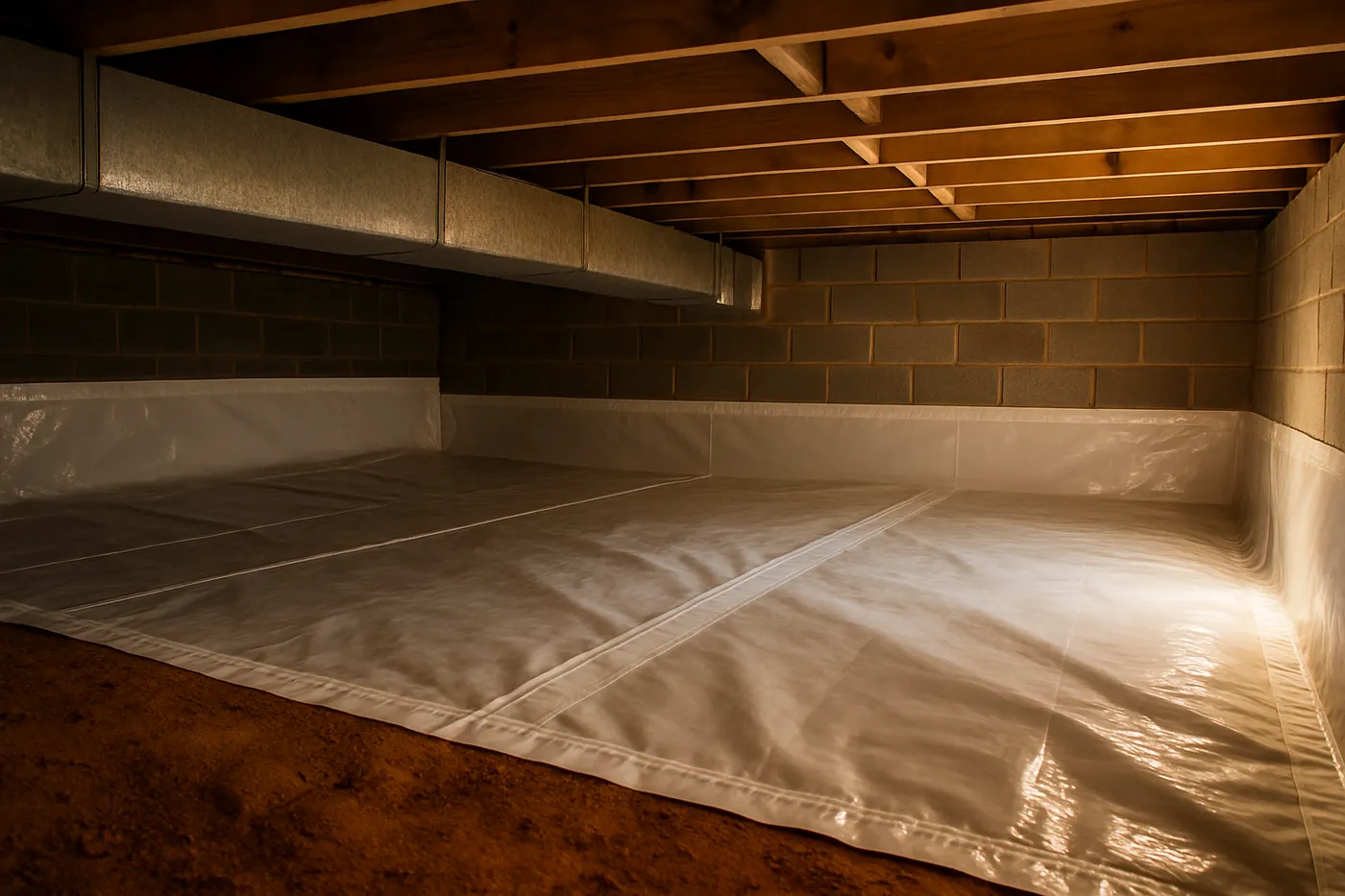
This basement has two seasons working on it, so give it two checks. In summer, the enemy is humid outside air condensing on cool below-grade surfaces — which means the single worst thing you can do is open the windows to “air it out.” Leave them shut, let the dehumidifier work, and confirm it is draining somewhere that can’t back up. In late winter and early spring, the enemy is liquid water: walk the perimeter after a hard rain, clear the downspout extensions, and make sure the red clay outside isn’t holding a puddle against the wall. A hygrometer on a shelf costs almost nothing and turns both checks into a number you can actually read.
Basement questions, straight answers
Why do Greensboro basements grow mold without ever flooding?
Two quiet feeds. Summer humidity condenses on cool basement walls — the below-grade half of the Piedmont's two condensation seasons — and the red clay outside percolates so poorly that rain parks against the foundation and migrates through as vapor. Neither leaves a puddle; both keep relative humidity high enough that walls, stored boxes, and framing feed colonies.
Where does basement mold show first?
The cool and the stagnant spots: exterior wall corners, behind stored belongings pushed against masonry, the base of stairs where air stalls, and any finished wall whose cavity traps vapor against block. Musty odor usually precedes visible growth — a basement that smells like a basement is reporting humidity, not character.
Is finishing a Piedmont basement asking for trouble?
Only if the moisture is unmanaged first. Framing and drywall against damp block builds a mold farm with a wall over it. The order that works: fix exterior drainage so clay stops parking water, verify wall dryness through a season, then finish with moisture-tolerant methods and keep mechanical dehumidification running. Finished basements here are fine — sequenced ones.
What does basement mold removal involve?
Containment at the stairs, negative air, HEPA filtration; removal of colonized drywall, insulation, and stored porous items; cleaning of block and framing. Then the part that decides recurrence: dehumidification sized for the space, and the exterior drainage work that stops the clay feeding vapor through the wall. Verification follows the work.
What does basement mold removal cost in Greensboro?
Most basement scopes run $1,500-$5,000 inside our general $500-$6,000 range — driven by how much finished material is involved and how much moisture correction the walls need. An unfinished basement with surface growth prices low; a finished one with colonized cavities prices by the wall area opened. Testing adds $300-$900 where needed.
Should I run a dehumidifier or open the windows?
Dehumidifier, and keep the windows shut. It feels backward, but through a Piedmont summer the outside air is more humid than your basement, so airing it out delivers moisture to cool surfaces and condenses it there. Hold the space in the 45-55% range, drain the unit somewhere that cannot back up, and open windows only on genuinely dry days.
Does basement mold affect the air upstairs?
It can, and the physics work against you. Warm air rising through a house pulls replacement air up from the lowest level, so a basement colony feeds the living space above it all day. That is why a musty smell upstairs is often diagnosed downstairs. It is also why containment during removal matters — an uncontained cleanup distributes what it disturbs through the whole house.
Get a free Greensboro mold inspection
Tell us what you’re seeing — a musty smell near the floor, dark streaks on attic sheathing, staining on a wall, water standing against the foundation — and we’ll schedule an inspection that goes into the crawl space and the attic. We reply the same business day.